
 Lizaveta Herman
The short answer

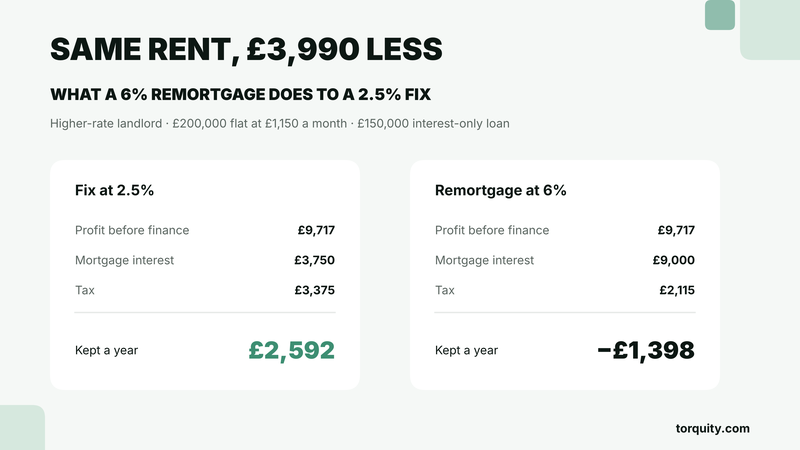
Expect the remortgage to cost far more than the deal it replaces. A fix taken at 2.5% will roll onto a rate near 6% in 2027. On our £150,000 interest-only loan, interest rises from £3,750 to £9,000 a year. After tax a higher-rate landlord goes from £2,592 a year in hand to a £1,398 loss.
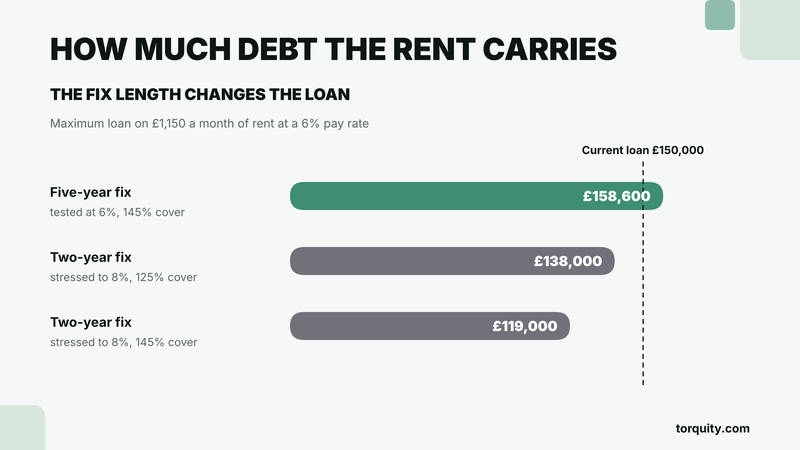
The loan size matters too. A five-year fix lets the lender test at the pay rate. A shorter fix adds two points, and the same flat then supports about £119,000 of debt.
What changed in November
On 5 November 2026 the Bank of England raised Bank Rate from 3.75% to 4%. Eight members of the Monetary Policy Committee voted for the rise. One wanted 4.25%. The Bank pointed to energy prices pushed up by conflict in the Middle East.
CPI inflation stood at 3.5% in September. The Bank expects it to reach around 5% by mid-2027 before it falls. The next decision lands on 17 December 2026.
Plenty of landlords, face this reset. Pegasus Insight's Q1 2026 research found that 39% of landlords planned to remortgage within a year. Among landlords with four or more mortgaged homes the share rose to 56%. Landlords with one to three loans came in at 24% (Mortgage Professional, May 2026).
Worked example: a £200,000 flat refinancing in 2027
Take a hypothetical higher-rate landlord with a £200,000 flat let at £1,150 a month. The £150,000 interest-only loan sits on a five-year fix at 2.5% that ends in 2027. We assume the new five-year fix costs 6%.
- Gross rent: £13,800
- Management at 12% plus VAT: £1,987
- Two weeks' void: £531
- Repairs, insurance and certificates: £1,500
- Landlord database fee: £65
- Profit before finance: £9,717
From April 2027 property income carries its own tax rates of 24%, 44% and 49% (GOV.UK, Budget 2026 rates annex). Mortgage interest earns a credit at the property basic rate. We assume that credit is 24%.
- At 2.5%: interest £3,750, cash before tax £5,967, tax £3,375, cash after tax £2,592.
- At 6%: interest £9,000, cash before tax £717, tax £2,115, cash after tax minus £1,398.
The rent stays the same, yet the landlord loses £3,990 a year. The tax bill barely shrinks. Interest earns only a 24% credit, while the profit pays 44%.
Our limited company comparison runs the same flat through a company. Check what your own flat would let for today in our free rent calculator. The lender's stress test starts from that figure.
The lender's stress test
The PRA's supervisory statement SS13/16 sets how lenders test rent against interest. For a fix shorter than five years, lenders must allow for a rise of at least 2 percentage points. They must also assume a rate of at least 5.5%. A fix of five years or more lets them test at the pay rate.
The statement calls 125% the industry standard minimum for interest cover. Most lenders test higher-rate taxpayers at around 145%, according to the Bank of England. Here is our flat under each test:
- Five-year fix at 6%, 145% cover: rent needed £1,088 a month. The flat passes and could carry up to £158,600.
- Two-year fix at 6%, stressed to 8%, 145% cover: rent needed £1,450 a month. The flat fails and suports only £119,000.
- Same two-year fix at 125% cover: rent needed £1,250 a month. Maximum loan £138,000.
On the two-year route the landlord must find about £31,000 to cut the loan. A product transfer with the same lender often skips fresh affordability checks, so ask your lender first.
Where the numbers break
Rent rises soften the blow, within limits. ONS puts annual UK rent growth at 3.8% to October 2026. A 3.8% rise on £1,150 adds £524 a year. That covers about a tenth of the extra interest.
Overpaying offers one way out. Paying £20,000 off the loan before the fix ends cuts interest at 6% by £1,200 a year. It also lowers the rent the stress test demands. Compare that with what the same £20,000 earns elsewhere.
Rate expectations can move against you before your fix ends. Fixed rates often move ahead of the Bank. Our article on what 6% mortgage rates do to a buy-to-let deal shows the same pressure on a purchase.
Tax keeps shifting too. The 2025 technical note set the finance cost credit at the property basic rate. Budget 2026 lifted that rate, and our Autumn Budget piece tracks the landlord measures. A credit below 24% would deepen the loss in our example. Check the final Finance Bill wording before you rely on it.
Checklist before your fix ends
- Diary the fix end date and start talking to lenders six months before it.
- Ask your current lender for a product transfer quote before you shop around.
- Run the stress test yourself at 125% and 145% cover.
- Price both a five-year and a two-year fix, since the stress test differs.
- Rebuild your cash flow after tax at the new rate.
- Check the rent against achieved rents on comparable lettings before you count on a rise.
- Ask a broker whether a five-year fix lifts the loan you can keep.
- Hold six months of mortgage payments in reserve while you refinance.
- Decide now whether you would sell, overpay or hold if the numbers turn negative.
Where Torquity fits
Torquity estimates rent from comparable lettings with a confidence range and calculates net yield, DSCR and cash-on-cash. Re-run your flat at the new rate and you see whether the rent still covers the debt. The rent calculator gives the market rent to feed into the lender's test.
General information, not tax or financial advice.
How we wrote this
Liza Herman, Research and Marketing at Torquity, wrote this article with AI assistance in drafting. Rate facts come from the Bank of England Monetary Policy Summary of 5 November 2026. Stress-test rules come from PRA supervisory statement SS13/16 (January 2026 update). Cover ratios come from a Bank of England Bank Overground article (2020). Tax rates come from the GOV.UK Budget 2026 rates annex. Refinancing data comes from Pegasus Insight via Mortgage Professional (May 2026). Rent growth comes from ONS (18 November 2026). We checked every source on 19 November 2026. The flat, the rates and the costs are our own assumptions.