
 Lizaveta Herman
The short answer

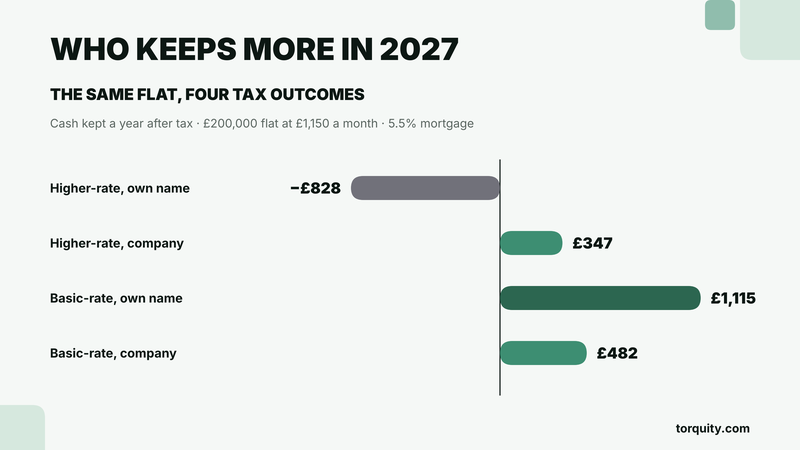
For a higher-rate taxpayer buying a new rental in 2027, a company usually keeps more. On our £200,000 flat, the landlord loses £828 a year in their own name. Through a company the same flat leaves £347 after dividend tax, or £540 kept inside the company.
A basic-rate taxpayer sees the reverse. Personal ownership leaves £1,115, against £482 through a company. Your tax band decides the answer more than the property does.
Why companies now buy most rentals
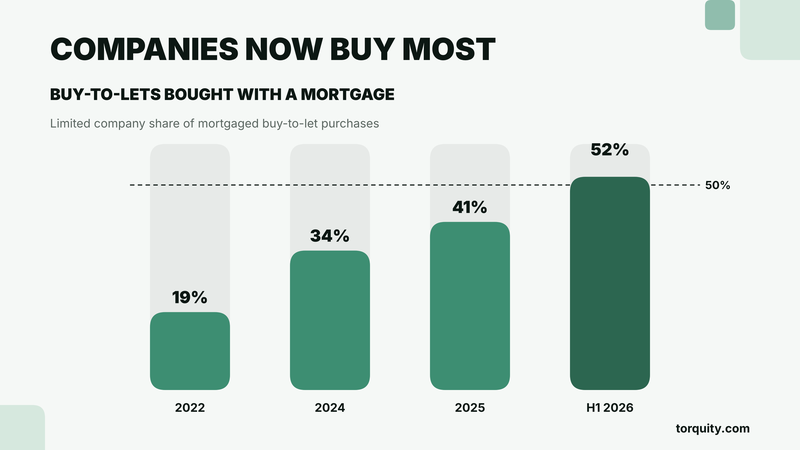
Paragon Bank found that limited companies made 52% of mortgaged buy-to-let purchases between January and June 2026. The share stood at 19% in 2022, 34% in 2024 and 41% in 2025 (Mortgage Solutions, November 2026). Companies took the majority for the first time.
Budget 2026 widened the gap. From 6 April 2027 property income gets its own rates in England, Wales and Northern Ireland: 24%, 44% and 49% (GOV.UK, Budget 2026 rates annex). The main rates on wages stay at 20%, 40% and 45%.
The rules on each side
- Personal ownership. Mortgage interest does not come off rental profit. You get a tax credit instead, at the property basic rate. The 2025 technical note set that at 22%. Budget 2026 lifts the property basic rate to 24%, and we assume the credit follows.
- Company ownership. The company deducts interest in full. It pays corporation tax at 19% on profits up to £50,000 and 25% above £250,000. Marginal relief applies in between.
- Taking money out. Dividends above the £500 allowance pay 10.75%, 35.75% or 39.35% (GOV.UK). The Budget 2026 annex keeps those rates for 2027 to 2028.
Worked example: one flat, two structures
Take a £200,000 flat let at £1,150 a month, bought with a £150,000 interest-only loan at 5.5%. We assume the same rate for both routes. In practice company loans can price differently so get both quotes.
- Gross rent: £13,800
- Management at 12% plus VAT: £1,987
- Two weeks' void: £531
- Repairs, insurance and certificates: £1,500
- Landlord database fee: £65
- Profit before finance: £9,717
- Mortgage interest: £8,250
- Cash before tax: £1,467
In a higher-rate landlord's own name. Tax falls on the full £9,717 at 44%, which comes to £4,275. The interest credit at 24% takes off £1,980. Tax of £2,295 beats the cash the flat produces. The landlord ends £828 down each year.
In a basic-rate landlord's own name. The same profit at 24% gives £2,332 of tax, less the £1,980 credit. Tax comes to £352 and the landlord keeps £1,115.
Through a company. We add £800 a year for accounts and filing, our assumption. Profit falls to £667. Corporation tax at 19% takes £127 and leaves £540 inside the company. Paid out as a dividend, a higher-rate taxpayer keeps £347 and a basic-rate taxpayer £482.
Both structures start from the same rent. Check yours in our free rent calculator before you compare the tax.
Push the rate to 6% and the gap widens. Interest climbs to £9,000 and cash before tax falls to £717. The higher-rate landlord now loses £1,398 a year in their own name. The company loses £83 after its £800 of costs and pays no corporation tax.
The higher-rate landlord ends £1,175 a year better off through a company. The basic-rate landlord ends £633 better off in their own name. Both figures assume the dividend allowance already goes on other income.
Where the numbers break
Moving a home you already own into a company counts as a sale. It can trigger stamp duty and Capital Gains Tax, as our Autumn Budget 2026 article explains. The comparison above suits new purchases far better than transfers.
Rates change the answer. At a lower mortgage rate, the personal tax hit shrinks because less interest sits outside the deduction. At 6% or above, the company advantage grows.
Our remortgage example takes the same flat from a 2.5% fix to 6%.
Your band can move. A pay rise can push a basic-rate landlord into the higher band, and rental profit counts towards that. Run the numbers for the next five years.
Companies add running costs and duties. You file accounts, a confirmation statement and a company tax return each year. Lenders may ask for personal guarentees. Our £800 allowance may prove too low for a portfolio spread across several companies.
Scotland sets its own income tax rates, so this example covers England, Wales and Northern Ireland only. The compliance list in our Renters’ Rights Act guide applies to both structures.
Retained profit has one more use. Money left in the company can fund the next deposit without passing through dividend tax first. That suits a landlord who plans to grow a portfolio. It suits nobody who needs the rent to live on.
Checklist before you choose
- Work out your tax band for the next five years, including rental profit.
- Get mortgage quotes for personal and company borrowing on the same property.
- Price accountancy and filing for a company each year.
- Decide whether you need the income now or can leave profit in the company.
- Check that you will hold long enough to cover the set-up costs.
- Keep company and personal bank accounts separate from the first day.
- Ask lenders whether they lend to a company set up only to hold property.
- Take advice from a tax adviser before you transfer any property you already own.
Where Torquity fits
Torquity estimates rent from comparable lettings with a confidence range and works through to net yield, DSCR and cash-on-cash. Those figures come before tax, so they feed both columns of the comparison. Start with the rent calculator to test the rent, then run each structure with your adviser.
General information, not tax or financial advice.
How we wrote this
Liza Herman, Research and Marketing at Torquity, wrote this article with AI assistance in drafting. Tax rates come from the GOV.UK Budget 2026 rates annex and the GOV.UK pages on Corporation Tax and dividend tax. The finance cost rule comes from the GOV.UK technical note of 26 November 2025. Market data comes from Paragon Bank via Mortgage Solutions (18 November 2026). We checked all sources on 19 November 2026. The flat, the mortgage rate and the company running costs are our own assumptions.