
Ask a property investor where to put money in the Midlands and the answer is usually Birmingham. The city has the volume and the case studies. This piece argues for looking twenty miles south instead, at the mid-market Warwickshire towns between the city and the Cotswolds. Leamington Spa is the cleanest test case, and one we have spent more hours on than is entirely healthy. What follows is the honest version.
Two figures set the scene. The average home in Warwick district, which covers Leamington, Warwick and Kenilworth, cost £373,000 in April 2026 according to the ONS local housing dashboard, up 3.0% in a year. The average private rent was £1,238 a month in May 2026, against a West Midlands average of £966. A district charging 28% above its own region is unusual, and the reasons it gets away with it are the substance of the case.

Where the demand comes from
The University of Warwick enrolled 27,880 students in 2024/25 on HESA figures, 19,475 of them undergraduates. The campus sits on Coventry's southwestern edge, but the overflow has long run south into Leamington. Warwick District Council's 2018 report on student accommodation, working from 2011 census data, found nearly 3% of the district's households were headed by a full-time student against 1.8% across England and Wales, with the Brunswick and Clarendon wards close to 10%. The four most student-heavy wards contained 44% of all private rented households in the district. The same report noted that even in those wards most private renters are not students, which matters later in this piece. The rental market has a hard geographic core, and it sits almost entirely in CV31 and CV32.
The second engine is less obvious. Leamington hosts one of the larger video game development clusters in the country, the grouping locals call Silicon Spa. Matt Western, the town's MP, told a Westminster Hall debate in March 2021 that the cluster employed over 2,000 people across 32 studios, more than a tenth of the UK's games development workforce at the time. Game studios pay close to London rates. Leamington does not charge London rents, and the difference shows up as deep demand for one and two bed flats in the town centre and, later, for terraces.
The railway does the rest. Chiltern Railways advertises direct trains to London Marylebone every half hour, in as little as 1 hour 10 minutes, with monthly season tickets from £816.40 on its Money Saver rate. Set that against the rent gap. The ONS June 2026 rents bulletin put average London rent at £2,294 in May; Warwick district's £1,238 leaves £1,056 a month, which pays for the season ticket with roughly £240 spare before you count the extra bedroom. Birmingham Moor Street is 32 to 37 minutes the other way on Trainline's timetables, so the town commutes in both directions.
What prices look like on the ground
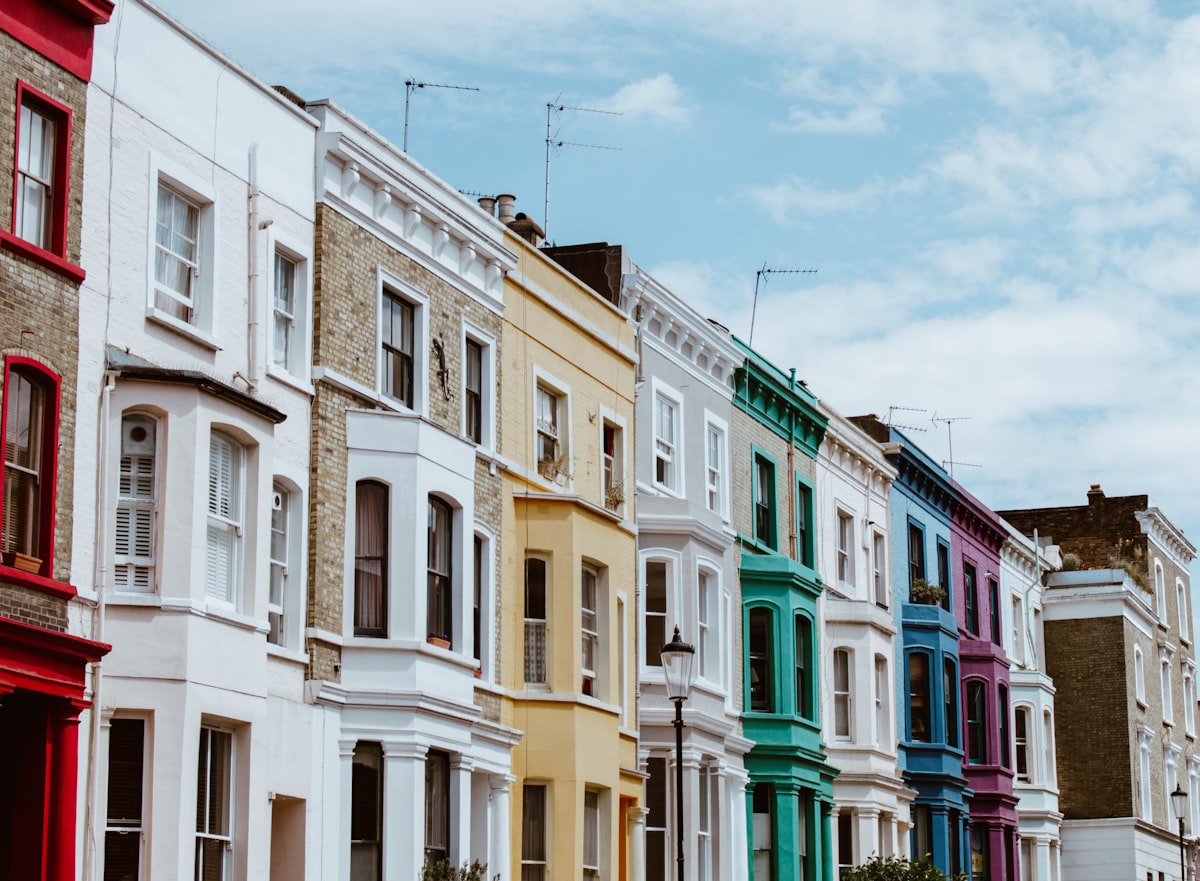
The ONS property-type breakdown for Warwick district in April 2026: terraced houses averaged £326,000, semi-detached £393,000 after a 4.3% annual rise, and flats £216,000. Rightmove's sold-price data for Leamington itself runs hotter, with terraces at £386,616 over the last twelve months and flats at £247,085, though its overall average of £376,785 is 4% down on the year before. The premium over the district figure is the Victorian and Regency stock, which a conservation-minded town cannot add more of.
The more useful split is inside the town. Martin & Co's May 2026 local guide puts CV32, the Regency north side, at an average of around £465,000 and CV31, the Old Town south of the river, closer to £315,000, with semi-detached homes in Whitnash and Sydenham typically achieving £270,000 to £330,000. A £150,000 gap between two postcodes that share a high street is exactly the kind of detail a district average buries.
For context on either side: the ONS has Birmingham averaging £236,000 in April 2026, up 0.7% on the year, with terraces at £222,000. London prices fell 2.1% over the same period on the ONS June bulletin. Warwick district's 3.0% growth sits between the two, though it trails the wider West Midlands at 5.8%. The cheap end of the region is compounding faster than the expensive end at the moment, and any honest account of this market has to include that.
The yield arithmetic, done honestly
Run the naive numbers and Leamington loses. Twelve months of the district's £1,238 average rent is £14,856, a 4.6% gross yield against the £326,000 average terrace. The same sum for Birmingham, £1,088 a month against a £222,000 terrace, gives 5.9%. On a spreadsheet with two cells, buy Birmingham.
The argument for the town is about what those two cells hide. Warwick district's rent is paid by tenant pools that fail for different reasons. Student demand tracks Warwick's intake. Commuter demand tracks the spread between Leamington and London housing costs, which is wide. Neither has much to do with whether a games studio sheds staff, and the council's own research says most renters in the student wards are not students anyway. Birmingham city-centre flats, by contrast, are a single trade on city-centre employment plus a heavy apartment pipeline, and the ONS already shows the strain: Birmingham flats averaged £147,000 in April 2026, down 2.6% on the year, while the city's overall average edged up 0.7%.
Rent behaviour points the same way. Warwick district rents rose 2.0% in the year to May 2026, against 3.3% in Birmingham and 4.2% across the West Midlands. Slower growth from a much higher base is what a mature rental market looks like. Markets that have already priced their demand tend to hold level in a downturn rather than handing back a spike.
Regulation got there first
Anyone sketching an HMO conversion should know the council moved years ago. Warwick District Council has run an Article 4 direction across the whole of Leamington Spa since 1 April 2012, so turning a family house into a small shared house needs planning permission precisely where student demand is thickest. And since 18 January 2024 a district-wide additional licensing scheme has required a licence for any HMO housing three or more people from two or more households; the council expected around 700 properties to come into scope. The conversion arbitrage closed over a decade ago. The practical consequence is that consented, licensed HMOs trade with scarcity value, so the accessible strategy in CV31 is the single let, and the HMO play is buying existing consent rather than starting from scratch.
What Leamington says about the mid-market thesis
The pattern generalises. A mid-market town can sustain rents well above its regional average when its employment base does not depend on the nearest city. Leamington adds a large university within ten miles and a fast London train, and the effects compound. Meanwhile the supply risk that haunts city centres barely exists here. New stock, where it comes at all, arrives as flats, and flats are the one segment the ONS shows falling in Birmingham. Nobody is building Victorian terraces or Regency crescents.
The counterweights are real. Entry yields are thinner than Birmingham's. Price growth trails the wider region, and Rightmove's sold-price data has the town's overall average 4% lower than a year earlier. A market this size also trades thinly, which cuts both ways: scarcity supports prices, and a mistake takes longer to sell out of. And the district average of £373,000 is close to useless for underwriting when the same town splits £315,000 against £465,000 by postcode.
That postcode split is why we use CV31 and CV32 in Torquity's own product examples. Underwriting here has to start from street-level comparables with a confidence range around the rent estimate, not a district mean, because Leamington is small enough to know properly and layered enough to punish anyone who does not.
If there is a trade in the mid-market Midlands thesis today, it is the unmodernised terrace south of the river, bought on street comps rather than the town's reputation, at CV31 money rather than CV32 money.