
The guessing game around minimum energy standards is over. On 21 January 2026 the government published its Warm Homes Plan, backed by the £13.2 billion settled at the June 2025 spending review, and alongside it the response to the February 2025 consultation on energy performance in the private rented sector. Every rented home in England and Wales must reach the equivalent of EPC C by 1 October 2030. One compliance date, and a £10,000 spending cap per property before an exemption becomes available. For anyone underwriting a buy-to-let purchase in 2026, EPC risk has stopped being a scenario and become a line item.
Just under half of private rented homes in England were at band C or above in the 2023 English Housing Survey, and Rightmove puts the number still needing work at 2.9 million. This piece covers the rules and the costs, then folds both into pricing. It sits alongside our earlier Renters' Rights Act note; that covered tenure, this covers the building.

Where the rules landed
The February 2025 consultation proposed a C for new tenancies from 2028 and for all tenancies by 2030, with a £15,000 cost cap. The January 2026 response softened both. The 2028 staging post is gone in favour of a single compliance date of 1 October 2030, and the cap fell to £10,000, or 10 per cent of the property's value for homes worth under £100,000.
The standard itself changed shape. Compliance will be judged against the new-format EPCs due in October 2026, which carry four headline metrics in place of a single score: fabric performance, heating system, smart readiness and energy cost. A rented home must meet a primary fabric standard first, then a secondary standard of the landlord's choosing, either heating system or smart readiness. Insulation cannot be traded away against a heat pump; the fabric has to perform on its own.
The exemptions do a lot of the work. Spend the capped amount without reaching the standard and you can register a ten-year exemption and keep letting. Landlords can also opt out of solid wall insulation entirely, again for ten years. Money spent from 1 October 2025 counts towards the cap. Boiler Upgrade Scheme grants, currently £7,500 for a heat pump, do not, so grants stretch the cap further. A property that achieves a C on the current methodology before 1 October 2029 is treated as compliant until that certificate expires. Enforcement sits with local authorities, with fines of up to £30,000 per property per breach, checked against the database created by the Renters' Rights Act. Short-term lets are outside the regime for now.
What a C costs on a Victorian terrace
The impact assessment published with the response puts the average cost of compliance at £5,400 per property. Treat that with care. The 2023-24 English Housing Survey puts the average cost of lifting a private rented home to band C at £6,864. For homes built before 1919 the figure is £10,788, and for anything rated F or G it is £16,983. Those are modelled SAP figures rather than invoices, so labour and materials inflation sits on top. Rightmove's Greener Homes Report puts the whole-of-market bill at £23.4 billion across 2.9 million rental homes, an average of £8,074 each. An average that close to a £10,000 cap tells you plenty of individual homes sit beyond it.
Pre-1919 means solid walls, and solid walls are where retrofit budgets die. The Energy Saving Trust puts internal wall insulation at around £12,000 and external at around £18,000 for a typical three-bed semi. One measure can swallow the entire cap. That is why the solid wall opt-out matters: the realistic route to a C on a Victorian terrace runs through everything except the walls.
A worked example
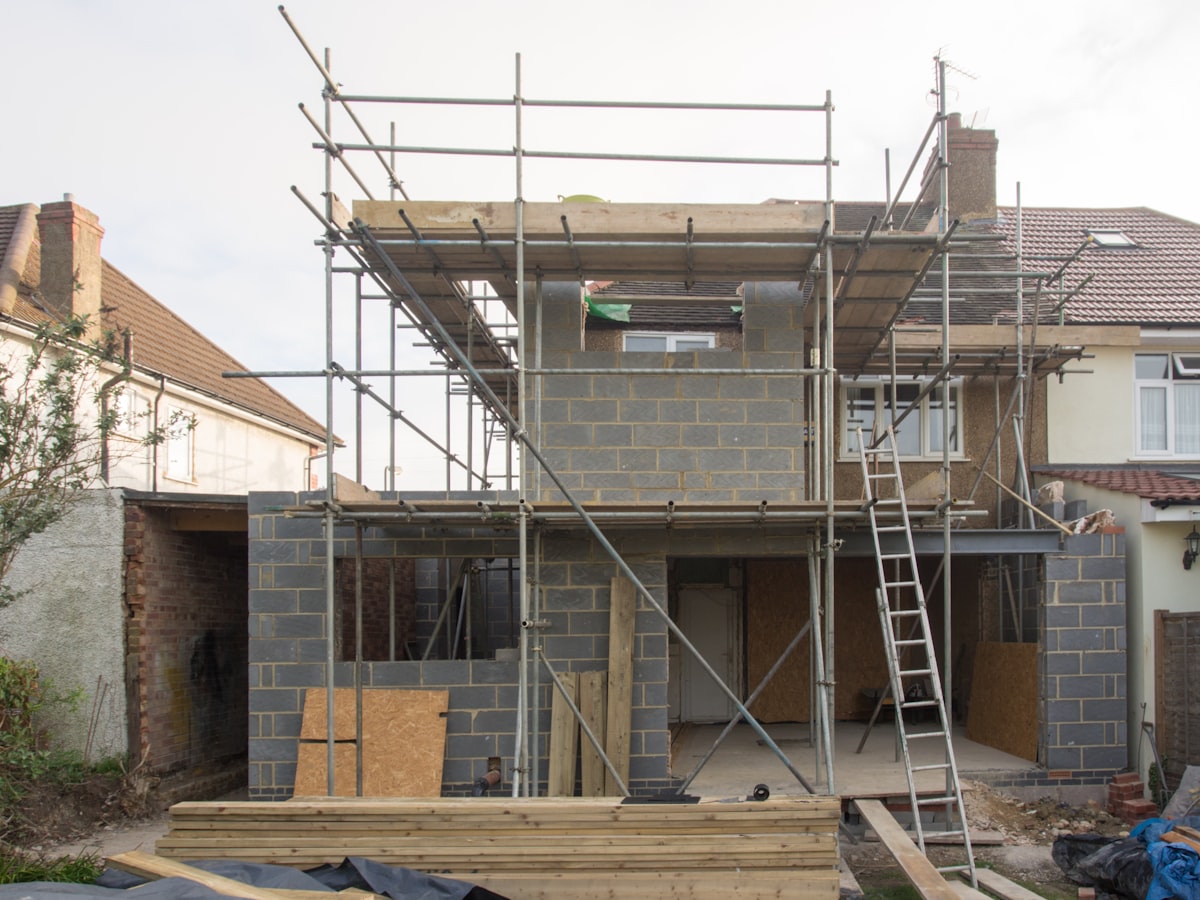
Suzanne Smith, who writes as The Independent Landlord, has documented taking a Victorian terrace from an E rating of 48 to a C at 77 without touching the walls. Topping the loft insulation up to 300mm cost about £800. Replacing a failing cellar ceiling and insulating the suspended floor above it came to £2,300. New double glazing, including a bay window, was the expensive part, and most of it was maintenance the house needed anyway. Total spend was roughly £10,500 over two years, on a property that already had a modern condensing boiler. One procedural lesson from her account: the original certificate assumed no loft insulation when 100mm was in fact there, so she now attends assessments in person with the invoices and FENSA certificates.
The pattern generalises. Loft top-ups, floor insulation, decent glazing and a condensing boiler get most terraces of this type over the line. What they cannot rescue is a house starting at F with single glazing throughout, or one heated on electric panel radiators. Those properties are heading for the exemptions register, and their pricing at auction should say so.
The rating you buy against is a moving target
Two methodology changes complicate the arithmetic. RdSAP 10, the assessment method in force since June 2025, can score the same property differently with no physical work done. Carbon factors were updated for a cleaner grid, and solar equipment counts for more than it used to. Band C starts at 69 points. A property that scraped in at 69 or 70 under the old rules may not hold its rating at reassessment, while one stuck at 67 might cross the line for free. Then in October 2026 the certificate itself is due to switch to the four-metric format, on a timetable the government has itself called ambitious.
The grandparenting rule cuts through some of this. A C achieved before 1 October 2029 counts as compliant until the certificate expires. Work done early is judged against a metric everyone understands; work delayed past 2029 answers to a fabric-first standard no existing certificate measures. For a buyer in 2026 that timing option has real value.
Pricing EPC risk into a purchase
The market has started this already. Research published in February 2026 by the estate agency network eXp UK found homes rated E or below priced 7.1 per cent beneath the rest of the market, a discount of £26,745 on average, against an estimated £11,780 to move a typical E up to a C. Where those numbers hold, buying the brown discount and funding the retrofit leaves nearly £15,000 of margin. They frequently do not. The same research puts the net gain at £42,642 in London and £2,694 in the South East, and discounts are thinnest exactly where gross yields look best. No vendor of a £100,000 northern terrace is conceding £26,000.
A workable underwriting sequence: treat the register entry as a hypothesis rather than a fact, since any certificate issued before June 2025 sits on the old methodology and scores of 69 to 72 deserve a contingency. Cost the recommendations against local contractor quotes rather than the certificate's own estimates, with the £10,788 pre-1919 average from the English Housing Survey as an anchor for older terraces. Model the exemption path explicitly, because for a share of stock the honest answer is £10,000 spent, C not reached, exemption registered, and a resale market that prices the house as exempt rather than compliant. Check the secondary metric too: a terrace with an unshaded south-facing roof has a cheap route through solar that a north-facing mid-terrace lacks.
The cap is a ceiling on compulsory spending, and it lands regressively. Spending £10,000 on a £90,000 terrace yielding 8 per cent gross costs more than a year of rent; the same sum against a £400,000 flat barely moves the appraisal. EPC risk needs pricing deal by deal rather than by rule of thumb.
When Torquity screens a market, EPC register data sits next to sold and let comparables, so what the C-rated house two streets over actually rents and sells for is answered from the record rather than from the agent's patter. The gap between that answer and the asking price is the retrofit budget a deal can carry.
Four years sounds like a long runway. It contains a certificate format that does not exist yet and regulations not due in force until 2027. Price the works at today's contractor rates, and hold a separate contingency for the rules themselves.