
Most analysis of AI and real estate focuses on the tools: platforms that automate valuations, chatbots that handle tenant enquiries, computer vision systems that assess property condition from photographs. These are real and worth understanding. But they are not the most consequential way AI is affecting property markets.
The biggest effects are indirect. AI is restructuring labour markets, redirecting capital flows, and consuming physical resources at a scale that directly changes the supply, demand, and pricing dynamics of real estate. These second-order effects are harder to see than a new proptech tool, but they are orders of magnitude more significant for anyone who owns, develops, or invests in property.
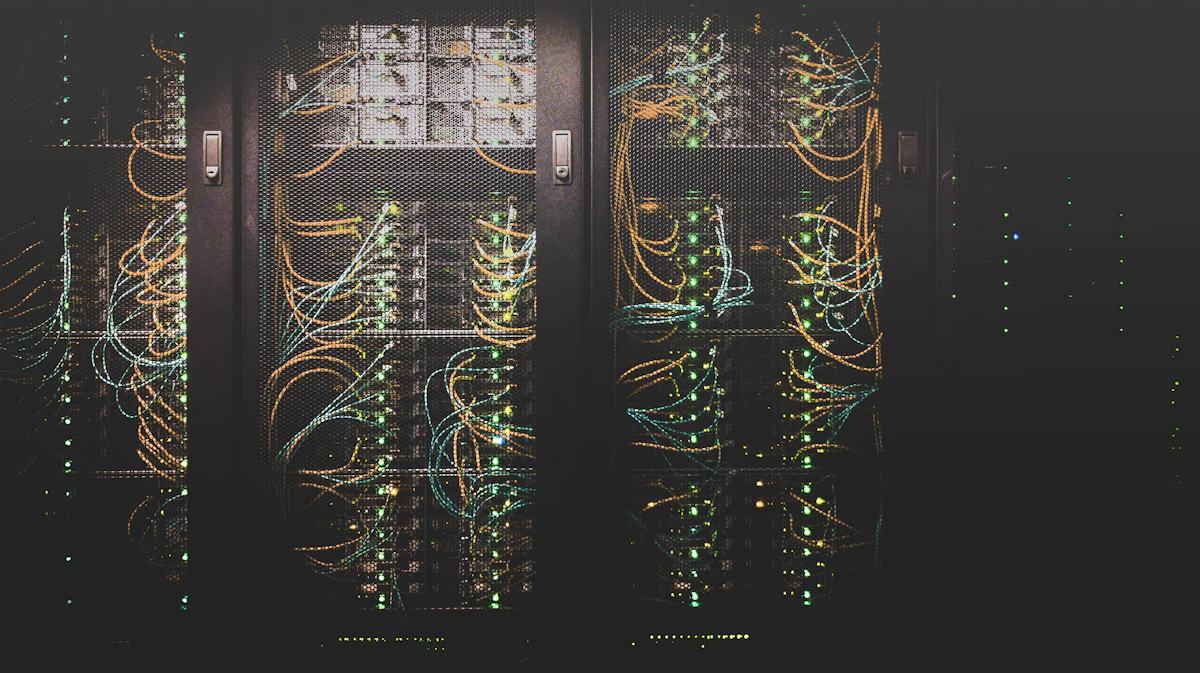
The Land Grab You Are Not Hearing About
AI companies doubled their U.S. real estate footprint to 2.04 million square metres by May 2025. Projections suggest this will reach 5.2 million square metres by 2030. The facilities driving this expansion are data centres, and they are not being built in the middle of nowhere. They are being built in and around the same metro areas where housing demand is already acute: Northern Virginia, Atlanta, Dallas, Phoenix, Charlotte.
Data centres have near-zero vacancy rates and are delivering roughly 30 percent annual rental growth in some markets. For landowners and developers, the economics are compelling. A parcel of land that might support a few hundred residential units can instead host a data centre generating far higher returns with far less management complexity. The capital is following the returns, and it is flowing away from housing.
The energy dimension compounds the land competition. Data centres currently consume approximately 3 percent of U.S. electricity, with projections suggesting 20 percent by 2040. In regions where grid capacity is constrained, new data centres are absorbing the power that new residential and commercial developments would need. Some municipalities are already facing choices between approving a data centre and approving a housing development because the grid cannot support both.
This is not a theoretical displacement. It is a measurable reallocation of land, capital, and infrastructure away from the built environment that most people live and work in, toward the digital infrastructure that AI requires. The effect on housing supply in affected markets is real and growing.
The Employment Risk No One Wants to Model
The standard narrative about AI and employment focuses on low-skill jobs: warehouse workers, call centre operators, data entry clerks. The property market risk is elsewhere. It is in the higher-income professional roles that underpin the mortgage market, the rental market, and the consumer spending that drives retail and hospitality real estate.
Stanford and PwC data show a 13 percent reduction in entry-level employment in the occupations most exposed to AI disruption. The specific roles tell you where the property market stress will show up: computer programmers, financial managers, accountants, and sales representatives. These are not minimum-wage workers. They are the people who qualify for mortgages, who rent premium apartments, and who spend money in the restaurants and shops that fill retail space.
There is an inversion happening that challenges conventional assumptions about economic resilience. Unemployment is rising among college-educated young adults aged 20 to 24, while falling for their less-educated peers. This reversal of the traditional pattern means the demographic that property markets have historically counted on for demand growth, young professionals entering their peak consumption years, is facing headwinds that the older models did not anticipate.
Citrini Research makes the point sharply: the top 10 percent of earners account for more than half of U.S. consumer spending. If AI disrupts the professional occupations that sustain this spending, the assumption that borrowers will remain employed with stable incomes, the assumption that underpins every mortgage market in every developed economy, comes under pressure. This is not a labour market story. It is a property market story.
Winners and Losers by Property Type
Principal Asset Management published one of the more useful frameworks for thinking about how AI's second-order effects distribute across property types.
Data centres are the obvious winner: near-zero vacancy, explosive rental growth, and a demand curve that shows no sign of flattening. Industrial and logistics properties benefit from the same AI-driven supply chain optimisation that increases throughput and demand for warehouse space. Residential is more nuanced. In theory, productivity-driven wage growth could improve affordability. In practice, the displacement of professional workers and the crowding out of housing by data centre development may offset this. Retail sits in the middle, potentially boosted by AI-enhanced consumer engagement but exposed to the spending contraction that follows white-collar job displacement.
Office is the clear loser. The combination of remote work, which AI enables and accelerates, and direct job displacement in the professional occupations that fill office buildings creates a structural demand problem that no amount of amenity upgrades or flex-space reconfigurations can solve. The buildings survive. The tenants do not.

The Amazon Analogy
Brendan Wallace, co-founder of Fifth Wall, the largest proptech venture fund, argues that AI will reshape real estate more drastically than the internet did. The comparison is instructive. E-commerce still accounts for only about 17 percent of U.S. retail sales, yet it was enough to bankrupt department store chains, collapse shopping centre valuations, and make Amazon the largest private-sector tenant in America.
The internet era cut the average S&P 500 company lifespan from 61 years in 1960 to 30 years today. It increased annual CEO turnover from 10 percent to nearly 25 percent. These were not gentle transitions. They were violent restructurings of which companies existed, where they operated, and how much space they occupied.
If AI follows a similar trajectory, which the pace of adoption suggests it might, the physical footprint of the economy will shift again, and the landlords, developers, and investors who are positioned for the old footprint will find their assets on the wrong side of the transition.
What This Means for Positioning
The practical implication is that real estate investors need to model AI's effects on their markets, not just on their workflows. A residential developer in Northern Virginia needs to understand how data centre competition for land and power will affect their future supply costs. An office investor in any major metro needs to stress-test their occupancy assumptions against professional job displacement scenarios. A retail landlord needs to consider what happens to foot traffic and tenant demand if the professional class that fills their catchment area shrinks by even five to ten percent.
These are not comfortable analyses. They challenge the assumption that underlies most property investment: that demand for physical space grows reliably with population and income. AI may break that assumption in specific markets and specific sectors, and the investors who identify where it breaks before the market prices it in will have an advantage that no proptech tool can provide.
The first-order effects of AI on real estate, the platforms and tools, get all the attention because they are tangible and sellable. The second-order effects, the structural changes to labour, capital, and energy, get almost none. That is where the real repositioning opportunity is, and it is happening now.